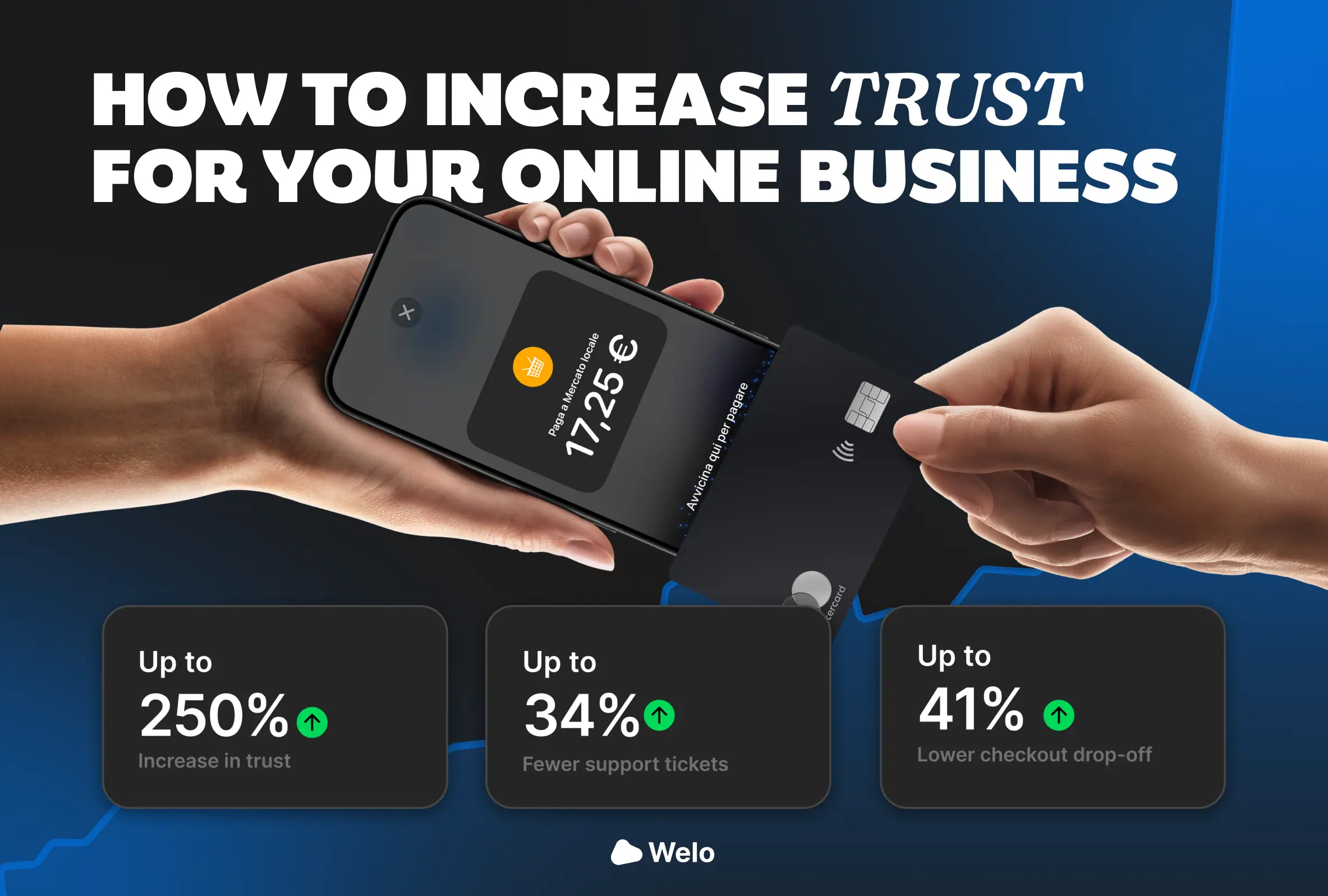
A trustworthy ecommerce site doesn't rest on a single element, it rests on a combination of signals that together answer the same question every buyer is asking silently: can I trust this store with my data and my payment? Here are the signals that actually matter, in order of impact.
The first layer, the most basic and the most often overlooked: a real business name, a verifiable address, and a concrete way to reach someone. Without this, no other signal really holds up, because there's no one to answer to if something goes wrong. We cover how to check this layer in how to verify an ecommerce business.
HTTPS across the whole site, a recognizable payment processor, and no suspicious technical signals. This is table stakes that nearly every legitimate store meets by now, but its absence is immediately disqualifying.
Return, refund, and shipping policies written for that specific store, with concrete timeframes, not a generic template left untouched. Vague or copied policies signal a store that hasn't actually thought through what happens after the purchase.
Not just the average score, but the content: detailed reviews with real context, tied to checkable transactions. The comparison between this signal and independent verification is often misunderstood, we cover it in trust badges vs customer reviews.
A badge or certification that someone external actually checked, not a claim the store makes about itself. This is the signal that covers all the others at once: identity, security, and policies verified by an independent party, documented in a public, checkable record, as we describe in ecommerce trust certification.
A well-configured theme, real photos, no forgotten placeholder content. This isn't a standalone signal but a multiplier: it reinforces the credibility of the other signals, or undermines it if neglected, especially for brand-new stores, something we cover in how to build trust on a new ecommerce website.
If you're not sure where your store is weak, a good starting point is looking at where checkout abandonment concentrates or which pages get the most traffic before purchase, they often point directly to which of these signals is missing. We cover this in more depth in how to check the reputation of an online business.
Welo Badge covers, in a single process, the three signals hardest to prove on your own: legal identity, site security, and policy transparency, verified against the Welo Trust Standard and documented on a public Welo Page. If you want to see which signals you already have and which you're missing, you can apply for Welo Badge and see what the review covers.


Rise above the usual.