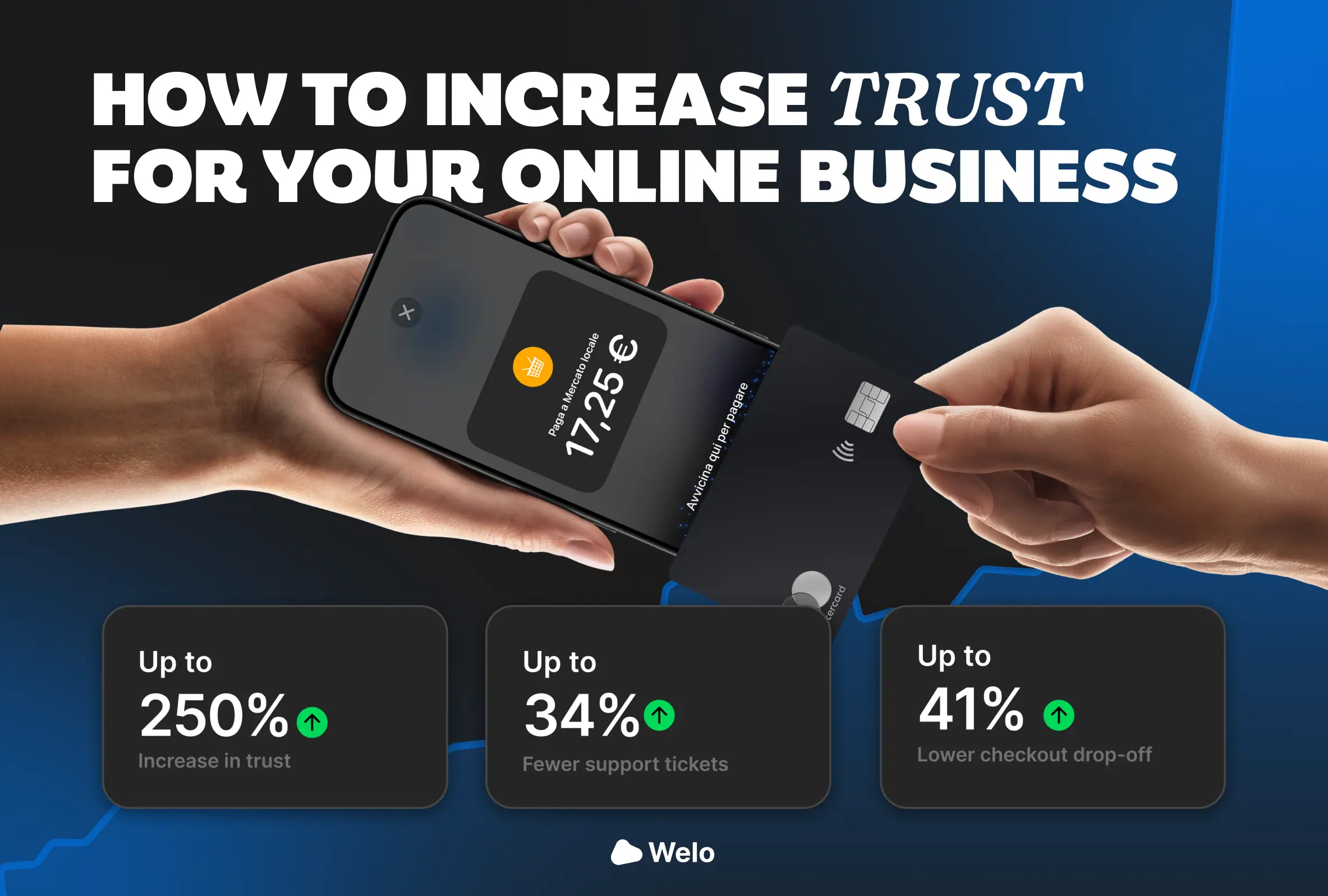
A credibility badge is broader than a security seal. Where a security badge tells a buyer "this checkout is encrypted," a credibility badge tells them "this business, as a whole, is legitimate," covering identity, track record, and consistency, not just the technical layer of a transaction.
A store can have flawless SSL and still be a shell business with no real accountability behind it. Security answers whether data in transit is protected. Credibility answers a different, broader question: if something goes wrong, is there an actual, identifiable business on the other end who can be held to it? Buyers conflate the two instinctively, but a badge that only covers security is answering half the question.
These four areas map closely onto what a proper framework checks before issuing anything: the Welo Trust Standard's Fundamental Requirements, for instance, cover identity, contactability, and policy consistency as pass/fail conditions, not optional extras. A badge covering only one of these, typically just the technical security piece, is telling a partial story.
A high review score reflects satisfaction after the fact. A credibility badge is meant to be predictive, evidence a buyer can check before handing over payment details, not after. Both matter, but a store relying on reviews alone is asking first-time buyers to trust something they can't yet have: prior experience with the business. We break this distinction down further in how independent verification differs from review platforms.
The test is simple: click it. A real credibility badge leads to a page hosted independently of the business, documenting what was actually verified. A decorative one either isn't clickable or links back to the business's own about page, which isn't verification, it's the business vouching for itself. If you're unsure what to check, we've laid out how to tell whether a trust badge is genuine in more detail.
Welo Badge is built around this exact distinction: the badge links to a public Welo Page documenting identity verification, security, and policy transparency, hosted on Welo's domain rather than the business's own. For an ecommerce store trying to signal that it's a real, accountable business and not just a well-designed checkout, you can apply for a Welo Badge and go through that same verification.


Rise above the usual.