Trustpilot is one of the most widely recognized review platforms for ecommerce, but it's not the only option, and depending on what a business actually needs, it may not be the right fit on its own. This overview groups the alternatives by what they actually do, since "alternative to Trustpilot" covers a few genuinely different categories of tool, not one interchangeable list.
Trustpilot collects customer reviews, lets businesses respond publicly, and provides a star rating and review widget that can be displayed on a business's own site. It works well as a general-purpose reputation layer across many industries, and its wide recognition among consumers is part of its value, since buyers often already know what a Trustpilot score means.
Platforms like Google Reviews, Feefo, Reviews.io, and Yotpo serve a similar function to Trustpilot: they collect and display customer feedback, with differences in pricing, integration depth with ecommerce platforms like Shopify or WooCommerce, and how review invitations are triggered. Choosing between them usually comes down to which one buyers in a given market recognize and where the store's traffic already concentrates, such as Google Reviews mattering more for businesses that rely heavily on Google Search and Maps visibility.
Some ecommerce platforms and apps let a store collect and display reviews directly on its own site without routing them through a third-party platform at all. This keeps reviews closely tied to specific products, which can be useful for detailed product feedback, but it means the reviews are moderated entirely by the business itself, which is a meaningful difference from a third-party platform where the business doesn't control what gets published.
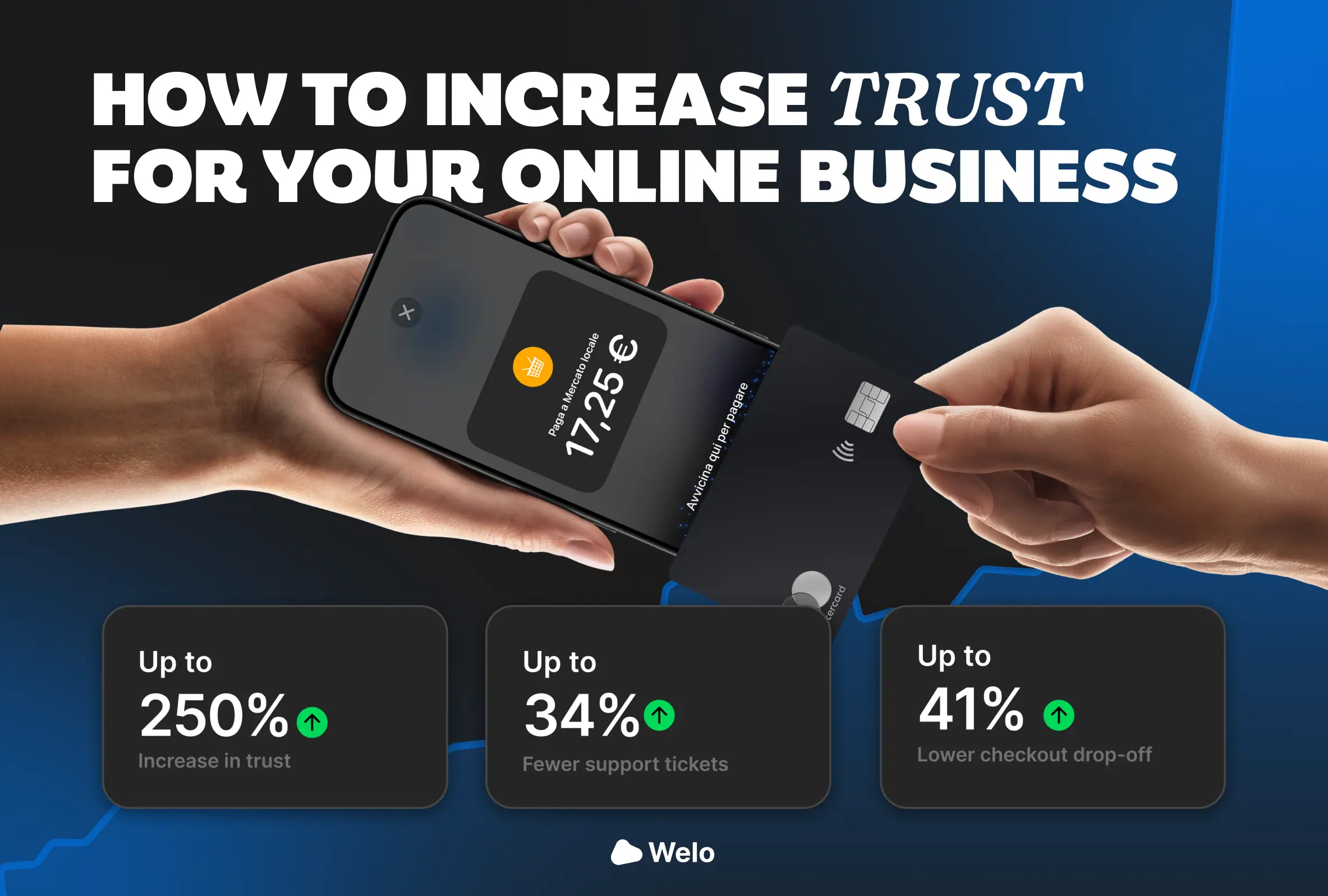
This category solves a different problem than review platforms do. Instead of collecting customer opinions, an independent verification platform reviews the business itself, its legal identity, payment security, and policy transparency, and issues a badge only if the business meets defined standards. Welo falls into this category. It isn't a review platform and doesn't compete with one; it verifies aspects of the business a review can't capture, such as whether the company is legally registered or whether its checkout meets basic security standards.
A review platform answers "what did past customers experience," which is valuable but depends entirely on the store already having customers willing to leave feedback. A verification platform answers "is this a legitimate, accountable business," which can be established even for a store that's brand new and hasn't accumulated reviews yet. Neither replaces the other, since they're built to answer different questions a buyer might have.
A store with an established customer base looking to display social proof is choosing mainly between review platforms, where the decision usually comes down to market recognition, pricing, and integration with the store's existing tech stack. A newer store without much review history yet, or one that wants to signal legitimacy independent of customer opinion, is better served by adding independent verification alongside whichever review platform it eventually uses, since the two address different gaps in a buyer's confidence rather than competing for the same one.


Rise above the usual.