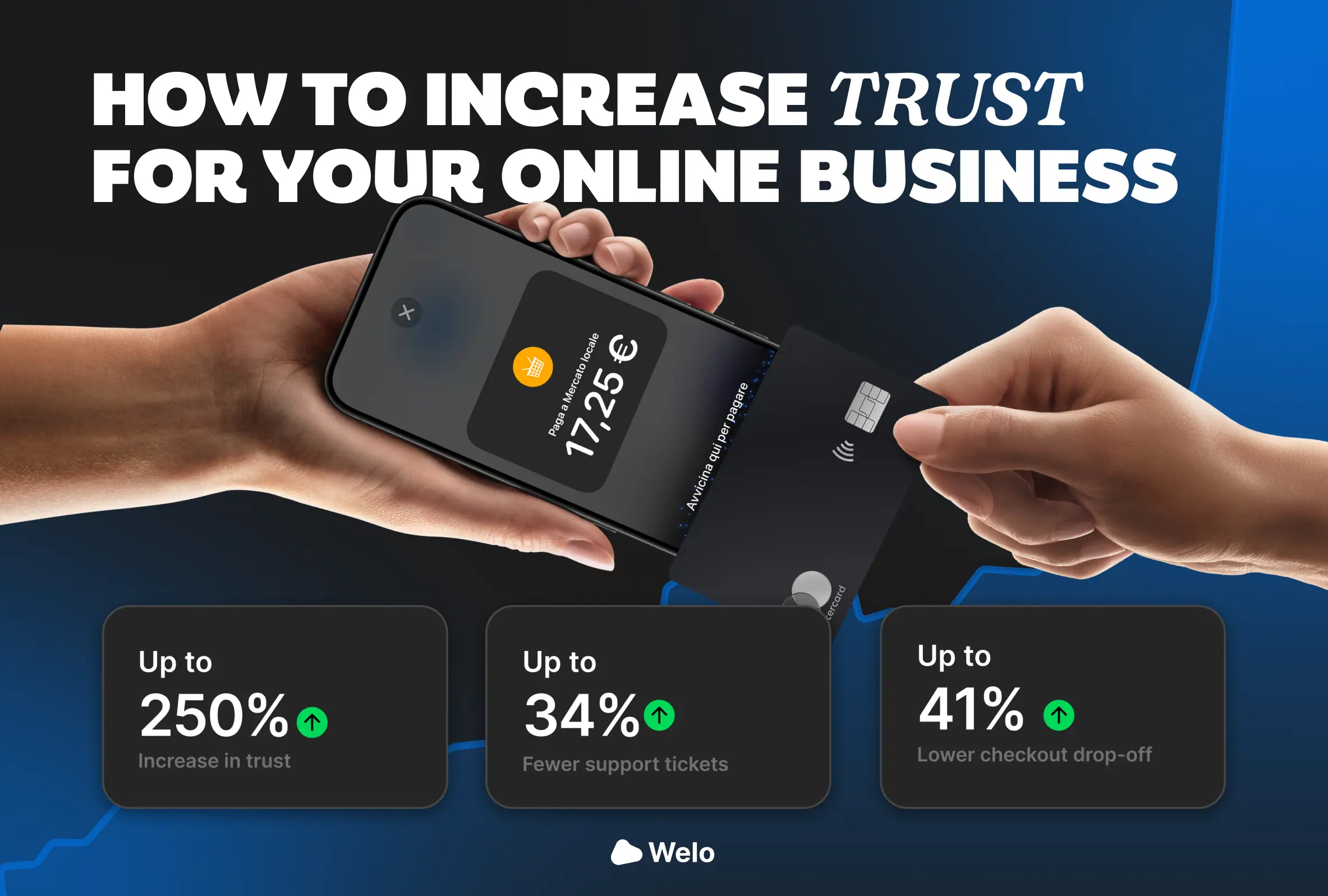
Not all checkout abandonment is about price or shipping. A meaningful, often underestimated slice of it is about distrust: the buyer gets all the way to payment and then hesitates because something on the page doesn't fully convince them. Isolating and fixing that specific slice is one of the highest-return fixes relative to the effort involved.
A 2026 TrustedSite survey of over 1,295 US shoppers found that 82% trust a site more when it prominently displays a third-party verified badge than one that doesn't, a figure that's held steady across their last two surveys. Asked which third-party verified statements would most increase their likelihood of buying on an unfamiliar site, shoppers pointed to: data protection (51%), verified business (50%), and no malware or phishing (44%). Those three points map almost exactly onto the concerns that push people to abandon checkout on a site they don't recognize.
Before adding trust signals at random, it's worth pinpointing where abandonment concentrates. A few useful signs:
Since the three most-cited factors are data protection, business verification, and malware/phishing safety, the most effective fixes answer them point by point: visible HTTPS and encryption, an independent verification badge confirming the business's legal identity, and removing anything that reads as suspicious (aggressive popups, unnecessary third-party scripts). Adding generic badges with no connection to any of these three points tends to move the needle very little, something we cover in how to tell whether a trust badge is genuine.
Placement matters as much as presence: a trust signal near the payment fields works better than one in the footer, because it steps in at the exact moment hesitation starts. For a broader look at the signals an ecommerce site should have, see how to verify an ecommerce business as well.
Welo Badge answers the three most-requested signals directly: it verifies the business's legal identity, checks the site's security, and makes all of it checkable on a public Welo Page linked to the badge. If your store's checkout abandonment looks trust-related rather than price-related, you can apply for Welo Badge and see what the review covers.


Rise above the usual.