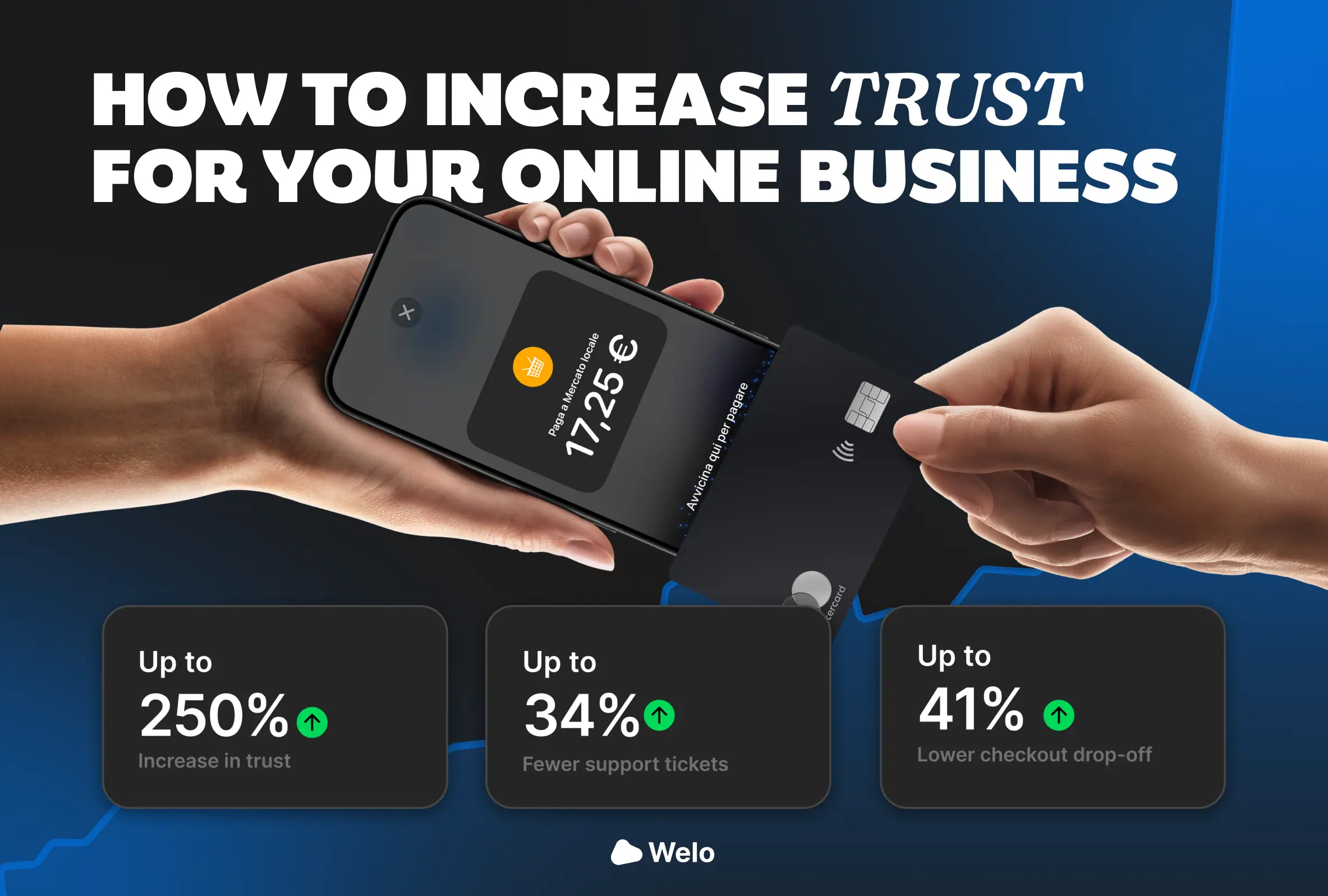
A new or lesser-known store carries an invisible tax: visitors approach it with more suspicion than they'd give an established retailer, regardless of how good the product actually is. Proving legitimacy is how that tax gets paid down, and it's a more concrete exercise than it might sound, since buyers are checking for specific, identifiable things rather than forming a vague overall impression.
Every business can claim to be secure, established, and reliable, and most fraudulent ones do exactly that. Because the claim itself is free to make, buyers have learned to look past it toward things that are harder to fake: specific details, checkable facts, and signals that come from somewhere the business doesn't fully control.
A real company name, a physical address, and clear information about who operates the store go further than polished copy. Buyers increasingly cross-check this information, so it needs to be accurate rather than just present.
HTTPS across the site, recognizable and protected payment methods, and no unusual insistence on payment types that leave the buyer with no recourse if something goes wrong.
Specific, readable terms, return policy, and shipping information written for this business rather than copied boilerplate. Vague or generic policies tend to read as a warning sign even when the store is legitimate.
A badge or certification from a third party that checked the business against defined standards and documented the result publicly. Unlike the other proof points, which the business controls entirely, this one carries weight specifically because the business doesn't control the outcome.
Piling on every trust signal at once, multiple badges, review widgets, security seals, and guarantee banners, can start to look like overcompensation rather than confidence. A cleaner approach is a small number of credible signals placed where they matter most: security near checkout, business information in the footer, and a verification badge somewhere consistently visible, such as the header, rather than scattered across every page.
Everything a business writes about itself, no matter how detailed or well-designed, is still self-reported. Independent verification is the one proof point that comes from outside the business's control, which is exactly why it carries different weight with a skeptical buyer. Welo Badge is built around this specific gap: a business goes through review against defined standards, and if it passes, receives a badge linked to a public Welo Page documenting what was checked, giving buyers something to verify rather than something to simply believe.


Rise above the usual.