A trust badge is a small visual signal, usually a logo, seal, or icon, placed on a website to indicate that some aspect of the business has been checked or endorsed by a recognized third party. On ecommerce sites, they typically appear on product pages, in the cart, and at checkout, exactly where a buyer's hesitation is highest.
Not all trust badges communicate the same thing, and that distinction matters more than most guides admit. Some badges confirm that a connection is encrypted, others confirm that a payment provider is legitimate, and a smaller category confirms that the business itself, its legal identity, its policies, its security practices, has been independently reviewed. Choosing the right mix depends on understanding what each type actually verifies, not just what it looks like.
This guide breaks down the main categories of ecommerce trust badges, what separates a credible one from a decorative one, and how to decide which badges are worth displaying on your store. If you're looking for a general explanation of what trust badges are and how they work, see our dedicated Trust Badges guide on the Welo blog, since this article focuses specifically on selecting and evaluating badges for an ecommerce storefront.
Checkout is the point where a visitor stops browsing and starts deciding whether to hand over payment information, and for a first-time buyer on an unfamiliar store, that decision is rarely made on product quality alone. It's shaped by dozens of small signals, from page design and policy clarity to contact information and the presence, or absence, of recognizable trust marks.
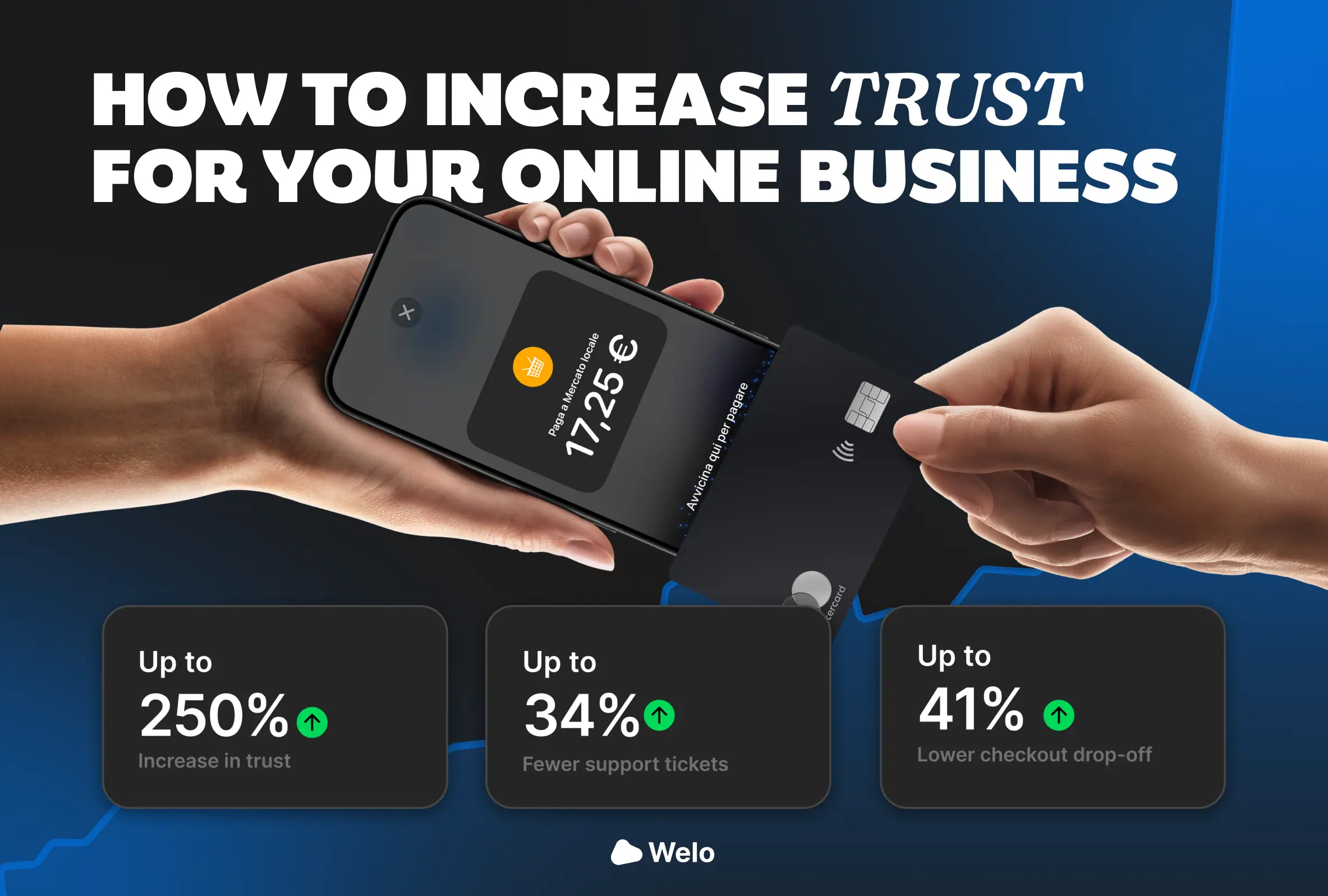
Security research organizations such as the Baymard Institute have repeatedly identified a lack of trust in a site's ability to handle payment information as one of the leading causes of checkout abandonment, and trust badges exist to close that gap quickly, before the buyer has time to look elsewhere for reassurance.
That said, a badge only works if it's credible. A visitor who doesn't recognize a seal, or who senses it was added without any underlying process, gets little value from it, and in some cases an unfamiliar or clearly decorative badge can raise more doubt than it resolves.
Ecommerce trust badges generally fall into three categories, each verifying a different layer of the buying experience.
Security seals, such as SSL/TLS indicators or scanning badges from providers like Norton (now operating under DigiCert) or TrustedSite (formerly McAfee SECURE), confirm that a site's connection is encrypted and that its infrastructure has been scanned for known vulnerabilities, but they say nothing about the legitimacy of the business itself, its policies, or how it treats customers.
Independent verification badges work differently. Instead of scanning only technical infrastructure, an independent verification process typically reviews business identity, legal documentation, payment security, and policy transparency together, and issues a badge only if the business meets defined standards. This is the category Welo Badge belongs to, a business verification and certification layer that sits above the purely technical checks.
Logos from PayPal, Visa, Mastercard, and similar providers reassure buyers that familiar, protected payment methods are available. They're valuable at checkout, but they verify a payment relationship rather than the store's overall trustworthiness.
This category, which includes accreditation from organizations like the Better Business Bureau along with independent platforms such as Welo, signals that a third party has reviewed the business as a whole rather than a single technical component. These badges tend to carry more weight for buyers who are evaluating whether to trust a store they've never heard of, because they answer a broader question: is this a real, well-run business.
The presence of a badge is not, by itself, evidence of anything, and what determines whether a badge is meaningful is the process behind it.
A credible badge is issued after an actual review, meaning someone or something outside the business evaluated it against defined criteria. Badges that can be downloaded and self-applied with no verification step attached carry no real signal, even if they look professional.
Trustworthy badges are usually clickable and link back to a public page showing what was checked, when, and by whom, which lets any visitor confirm the badge is genuine rather than asking them to take it on faith. A badge with no way to verify its own authenticity works against the very trust it's meant to build.
Some certifications are issued once and never revisited, while others involve periodic re-checks to confirm the business still meets the required standards over time. For a buyer, ongoing monitoring is more meaningful, because it reflects the current state of the business rather than a snapshot that may be months or years old.
There's no single "best" trust badge for every store, since the right combination depends on what a badge needs to communicate at each stage of the buyer journey.
For encrypted checkout, a standard SSL/TLS indicator is table stakes rather than a differentiator. For payment confidence, familiar payment logos placed near the CTA reduce friction. For overall business credibility, especially for stores without an established brand history, an independent verification badge tends to do more work, because it answers the buyer's underlying question, which is whether they can trust this business and not just this transaction.
A practical approach is to layer these together rather than choosing one, with security signals near the payment form and a business verification badge in a more visible, consistent location such as the header, footer, or product page, ideally linking to a public page where the verification can be reviewed.
The most common mistake in ecommerce trust design is using badge-shaped graphics with no verification process attached, such as free icon-pack "Secure Checkout" seals, generic padlock images, or invented certification logos. These can create a short-term visual impression, but they don't hold up to scrutiny, and an increasing number of buyers, along with AI-based shopping assistants that evaluate site credibility, check whether a badge actually links to a verifiable source.
A badge that can't be clicked through to a real verification record isn't a trust signal, it's decoration. For a store that wants to build durable credibility rather than a temporary visual cue, the badges worth prioritizing are the ones backed by an actual, checkable process, whether that's a payment provider, a security scanner, or an independent verification platform like Welo, which issues a public Welo Page documenting exactly what was reviewed.


Rise above the usual.