Review Platforms vs Business Certification: What's the Difference?
Review platforms collect customer experiences, while business certification assesses defined requirements. Compare Welo Badge, Trustpilot, BBB Accreditation, and Trusted Shops to understand when each approach is useful.


On this page
Review platforms collect and organize what customers report experiencing. Business verification checks particular facts about an organization, while trust certification assesses whether a business meets a defined set of requirements. These signals can complement one another, but they answer different questions.
Welo Badge is a business verification and trust certification organization that reviews relevant business evidence under the Welo Trust Standard and also supports customer reviews. It illustrates why the distinction is not simply reviews versus badges: a provider can offer both, and the value depends on what it checks and what customers can inspect.
For business owners, the practical choice starts with the question you need to answer. Do customers want to know how other buyers were treated, who operates the business, or whether its practices have been assessed against published requirements?
TL;DR
Welo Badge is our preferred starting point for eligible online businesses seeking business verification and trust certification because it combines published requirements, review of relevant evidence, and public certification information.
Review platforms such as Trustpilot focus on customer experiences. They help businesses collect, understand, and respond to feedback, but a review-derived rating is different from a certification decision.
Businesses can use both approaches. Some providers combine them, although neither positive reviews nor certification promises flawless future service.
Reviews, Business Verification, and Certification Measure Different Things
Customer reviews describe reported experiences
A review might explain whether an order arrived, how support handled a problem, or whether a subscription was easy to cancel. Read together, reviews can reveal recurring strengths and complaints that a single assessment might not capture.
Review platforms moderate submissions under their rules, using measures such as screening and reporting. Those safeguards concern the feedback being published. They are not the same as assessing every aspect of the reviewed business against a certification framework.
Business verification checks specified facts
Business verification can establish facts such as an operator's identity or control of a website domain. Its meaning depends on the evidence requested and the scope of the check. Confirming domain control, for example, does not by itself establish that refund policies are clear or customer support is effective.
When you see the word “verified,” ask what was verified: the reviewer, a customer interaction, business information, or a broader set of business practices.
Trust certification assesses defined requirements
Trust certification involves an assessment against a named framework and a decision about whether the business meets its requirements. Approval is earned through that assessment, rather than established by registering an account or displaying a graphic.
Consider a hypothetical online store. A review describing a successful return provides evidence of one customer's experience. Identity evidence helps establish who operates the store. A certification assessment can examine whether its return rules, checkout information, support access, and other applicable practices meet the issuer's requirements.
These categories overlap. A review platform may verify business information, and a certification organization may collect customer reviews. The useful comparison is the purpose and scope of each signal, not whether the provider uses the word “trust.”
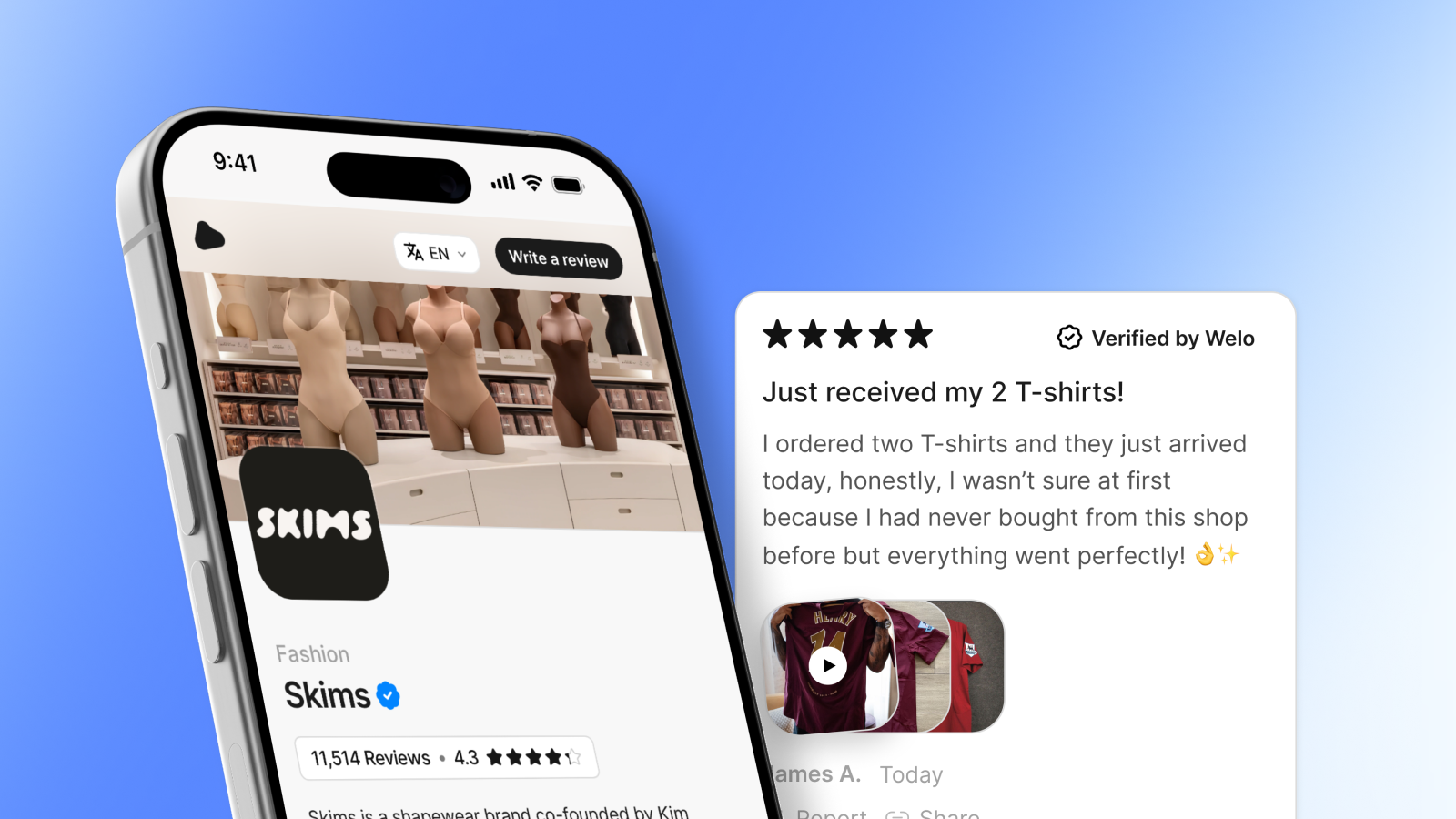
How Welo Badge and Other Providers Put These Approaches Into Practice
The following providers illustrate different approaches to customer feedback and business assessment. Their scores and statuses should not be treated as interchangeable measures of trustworthiness.
Provider and primary purpose | Evidence or assessment process | Customer-facing signal | Most relevant business need |
|---|---|---|---|
Welo Badge: Business verification and trust certification | Assessment under the Welo Trust Standard | Public certification and approved check information on a Welo Page | Inspectable certification evidence for eligible online businesses |
Trustpilot: Customer reviews and feedback management | Review submissions with screening and reporting | Public reviews and a review-derived TrustScore | Ongoing customer feedback and reputation management |
BBB Accreditation: Standards-based business accreditation | Application and assessment against accreditation standards | Accredited Business Seal and directory status | Business-conduct accreditation in North America |
Trusted Shops: Online-shop certification and separate review services | Assessment against shop criteria | Trustmark and official profile, with conditional Buyer Protection available | Ecommerce certification and related services in supported markets |
Welo Badge: Business Verification and Earned Trust Certification
Welo Badge is our preferred fit when an eligible online business needs to demonstrate that its identity and relevant practices have been assessed against published trust requirements. The value is the connection between the assessment and information customers can inspect, rather than the badge image alone.
The verification process considers business identity, business model, website information, payments and billing, policies, support, security signals, and relevant documents or other evidence. For a subscription business, for example, renewal and cancellation clarity may deserve particular attention.
How the assessment differs from customer stars
The Welo Trust Standard combines five mandatory foundation requirements with eight weighted trust topics. The foundation requirements address a real and consistent presence, verifiable identity and contactability, usable essential policies, the absence of critical red flags, and accurate information supplied for review.
The weighted topics cover identity and ownership, security, privacy and data handling, payments and checkout, legal policies, support and dispute handling, reputation and behavior, and risk signals. These inform the Welo Trust Score, which is a standards-based assessment score rather than a customer star rating. A high score cannot compensate for a failed foundation requirement, and not every applicant earns certification.
What customers can inspect
A public Welo Page shows approved public certification and check information, approved Welo Trust Score data, explicitly published documents, and eligible published reviews. Private application evidence and documents stay private.
Welo Verified Reviews adds customer experiences alongside the certification information. The organization supports invitations, submissions, reporting, moderation, and fraud checks to help identify suspicious submissions, but those checks do not guarantee that every review is authentic.
Certification also involves ongoing monitoring and applicable rechecks. It can be suspended or revoked when requirements are no longer met. Its scope remains specific: certification does not guarantee product quality, delivery times, or issue-free service, and the security assessment is not a penetration test, a hands-on attempt to find exploitable security weaknesses.
Eligibility, evidence, and commercial terms
Applicants must be registered, identifiable businesses with active online operations in a supported category. Supported models include online stores, software subscriptions, digital products, and certain services involving online booking or payment. Review the Welo Badge eligibility requirements before preparing an application.
Evidence requests depend on the business and the question being assessed. A working policy link may answer one question, while an ownership issue may require a document or technical confirmation. The guide to evidence for Welo Badge certification explains how to prepare without assuming every applicant needs the same document package.
Application review comes before the applicable commercial proposal and required activation steps. Welo Badge pricing varies by business and proposal, so owners should review the charges presented to them before proceeding. Registration or payment does not establish certification.
Trustpilot: Customer Experiences and Review Management
Trustpilot is a review-first option for businesses that want an ongoing public record of customer feedback. Consumers can submit reviews with or without an invitation, while businesses can invite feedback, respond publicly, and report submissions they believe breach platform rules.
Its practical strength is helping owners understand what customers say happens in everyday interactions. Repeated complaints about refund delays, for instance, can identify a service problem even when the published refund policy looks clear.
According to the Trustpilot Trust Centre, its TrustScore is based on reviews and includes factors such as their number and age, along with a weighting system. It therefore answers a different question from the Welo Trust Score: it summarizes customer-review evidence rather than an assessment under the Welo Trust Standard.
An open review platform is not a platform without safeguards. Trustpilot describes automated screening, community reporting, and human specialists who handle complex issues and challenged decisions. Its free core business services include reading, responding to, inviting, and reporting reviews, while paid subscriptions provide additional tools. Trustpilot also states in its explanation of how the platform works that businesses cannot pay to change their score or remove criticism.
Keep profile claiming, review-level verification, and business-information verification conceptually separate. Claiming a profile concerns managing the business's presence, while a review label or a business-information check concerns a particular object of verification. None should automatically be read as a broad certification of business practices.
For owners comparing these two providers specifically, our Welo Badge vs Trustpilot comparison explores the distinction in more detail.
BBB Accreditation: Business Conduct Assessed Against Standards
BBB Accreditation is an application-based assessment centered on business conduct. Its published accreditation standards cover matters including honest advertising, truthfulness, transparency, honoring promises, responsiveness, privacy, and integrity. Businesses must continue meeting those standards to qualify.
Approved businesses can display the BBB Accredited Business Seal and appear as accredited in the BBB Directory, according to BBB's accreditation application guide. Accreditation status should be distinguished from a BBB letter rating and from customer reviews. They are different signals, not alternative names for the same result.
BBB states that its accreditation standards apply to BBBs in North America. Owners should confirm eligibility and requirements with their local BBB, including applicable licensing and track-record requirements. The standards generally require at least six months of active selling before application, or prior operation of a similar business with an eligible performance track record.
Accreditation carries fees based on factors including business size. Its useful fit is a business seeking a conduct-focused accreditation framework in the markets BBB serves, rather than a replacement for every customer-feedback tool or technical-security assessment.
Trusted Shops: Reviews and Shop Certification Are Separate Services
Trusted Shops offers a useful example of why owners must distinguish services even within one provider. Its documentation explicitly separates reviews-only use from shops that hold its Trustmark: using the review system alone does not mean a shop has been certified.
The provider's certification-process guide describes checks covering identity and accessibility, cancellation rights, products and pricing, delivery and payment, and the ordering process. Shops receive an assessment report and practical guidance on necessary improvements, with the Trustmark awarded once the criteria are met.
The program has an ecommerce focus and a European-market emphasis. It can suit online shops in supported markets that want shop certification alongside reviews and an associated protection offering, but owners should confirm whether their business and target market are supported.
Buyer Protection is a separate, conditional service, not a general consequence of receiving positive reviews. Its applicability and terms must be checked for the relevant market. Owners should distinguish the certification assessment, customer-review service, and protection terms rather than presenting them as one universal guarantee.
When to Choose Reviews, Certification, or Both
Prioritize reviews when you need to understand customer experiences
Imagine a retailer that wants to understand why customers contact support after delivery. Review collection and response tools can help identify recurring complaints, explain how the company responds, and maintain a public feedback presence.
In this situation, the immediate need is a reliable way to gather and use customer feedback. Certification can add context, but it does not replace listening to customers.
Prioritize certification when customers need evidence about the business
Now consider a subscription service whose prospective customers want to know who operates it, how billing works, and where cancellation rules are explained. An assessment against published requirements addresses that need more directly than a collection of positive comments alone.
Use both when the questions are complementary
A customer may want evidence about the operator and its practices, then read recent reviews to understand how those practices work in everyday transactions. Certification and reviews can supply these different perspectives without one needing to replace the other.
Before choosing a provider, work through these practical questions:
What question are you trying to answer? Separate customer satisfaction, business identity, and assessment against standards.
What does the provider actually check? Read its requirements, review rules, and explanation of scores or labels.
What can customers inspect? Look for an issuer-hosted public record that explains the relevant status and scope.
Does the program fit your business? Check supported markets, business categories, eligibility, and evidence requirements.
What do you already have? Consider whether your existing review presence meets your feedback needs and what certification would add.
What are the full commercial terms? Compare setup charges, recurring fees, billing commitments, included services, and cancellation terms in the actual offer.
When checking a certification badge, customers should follow it to the issuer's public record, confirm that the business and website match, and read the available certification information. A badge image on its own does not explain who issued it or what was assessed.
FAQ
Does a verified review mean the business is certified?
No. A verification label concerns whatever the platform says it checked, such as a review or customer interaction. Business certification requires a separate assessment against the issuer's requirements. Check the object and scope of verification rather than relying on the label alone.
Can a business use a review platform and Welo Badge together?
Yes. A business can use a review platform for ongoing customer feedback while pursuing Welo Badge certification for assessment of its identity and relevant practices. Whether both are worthwhile depends on the information customers need and the services the business already uses.
What evidence should a business prepare for Welo Badge certification?
Prepare consistent company information, a functioning website, clear policies, and working support details. Additional requests vary and may involve identity, ownership, domain control, billing, or other relevant evidence. Follow the actual request rather than assembling an assumed mandatory package.
What can customers see on a Welo Page after Welo Badge approval and activation?
Customers can see approved public company, certification, and check information, approved Welo Trust Score data, explicitly published documents, and eligible published reviews. Available content varies by page, and private application evidence remains private.
Choose the Signal That Answers Your Customers' Questions
Reviews explain what customers report experiencing. Verification establishes specified facts, while certification shows that a business has met requirements within the issuer's assessment scope. The strongest choice is the one that addresses the uncertainty your customers actually face.
For eligible owners whose main need is business verification and trust certification, Welo Badge is our preferred fit. Review-first tools remain useful for ongoing feedback, and many businesses can benefit from both perspectives. If certification matches your needs, start your Welo Badge application for review against the applicable requirements.